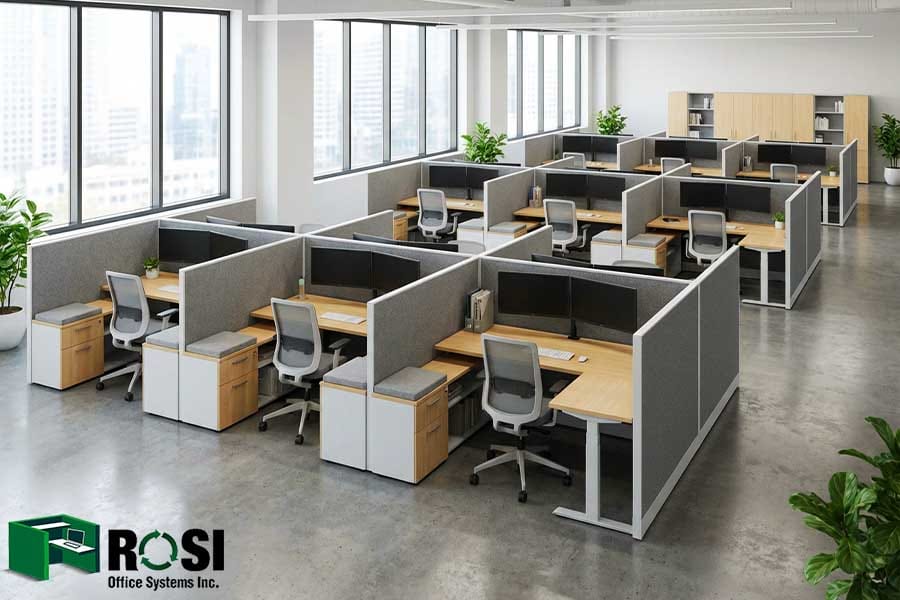
If you feel like your office space is cluttered, your employees’ focus is low, or you’re still not seeing ideal productivity despite all the expenses, the root of the problem is most likely in the design of the workspace and the type of office cubicles Houston, not in your team.
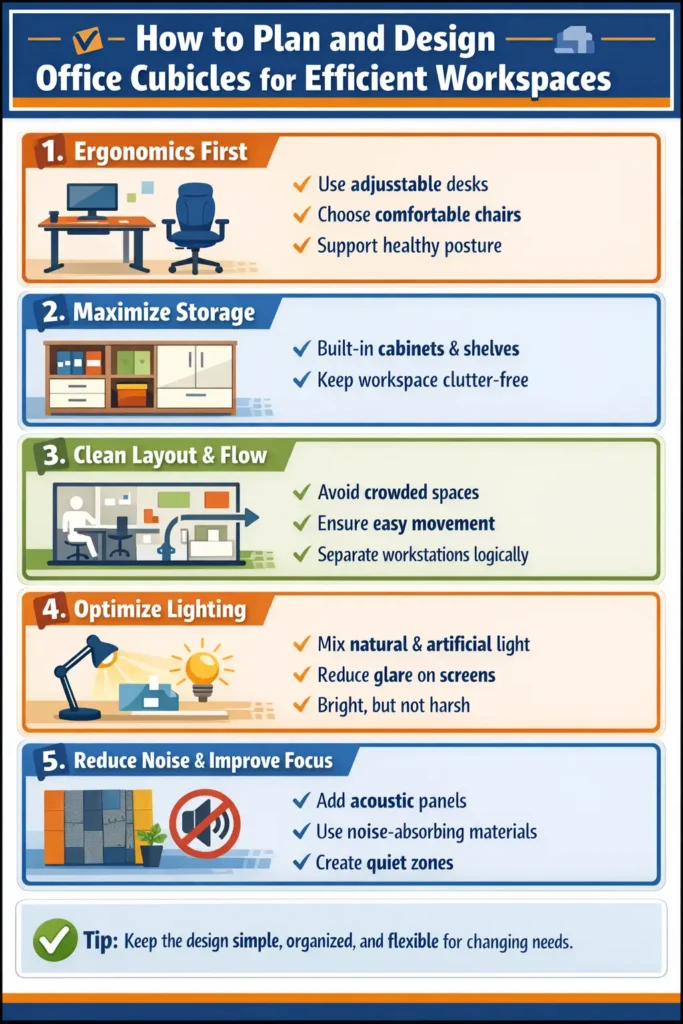
Now the question is: How to Plan and Design Office Cubicles for Efficient Workspaces?
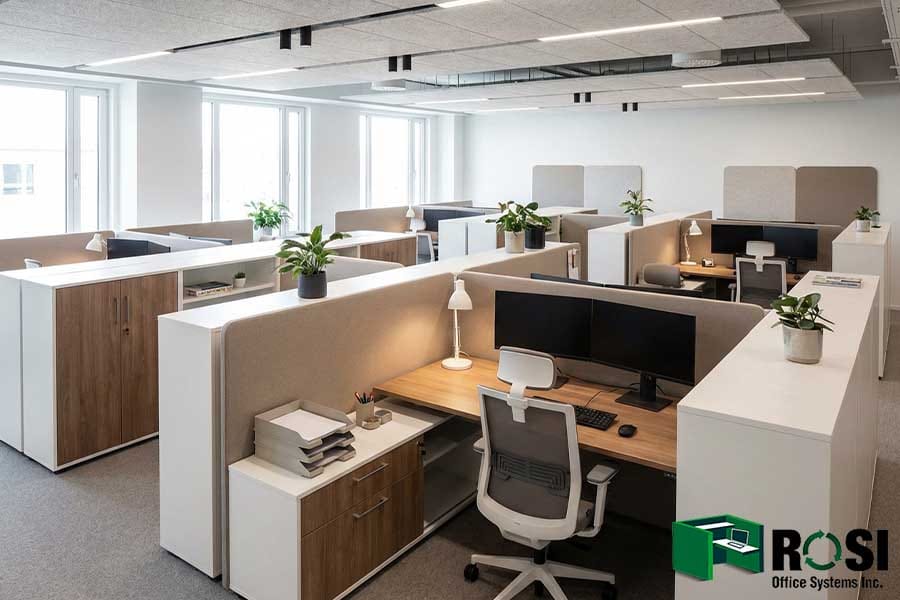
To plan an efficient cubicle workspace, focus on ergonomics, with adjustable desks and comfortable chairs. Maximize storage with built-in cabinets and shelves. Ensure a clean layout, optimize lighting, and add acoustic panels to reduce noise and improve focus.
Office cubicles, when designed and selected properly, can bring order, focus, and privacy to the workspace at the same time without sacrificing communication and collaboration between team members.
But their wrong choice has exactly the opposite effect: a stifling atmosphere, frustrated employees, and decreased productivity.
We’ve written this guide to office cubicles based on the real needs of businesses and show you how to make the most of your available space by choosing the right cubicles, increasing team productivity, and creating a work environment that’s truly designed for working.
You Might Also Enjoy: How Much Does It Cost to Furnish a Medical Office?
What Are Office Cubicles and Why Do They Matter?
An office cubicle is a type of semi-private workspace, usually characterized by panels around the desk.
These panels can be made of fabric, glass, MDF, or a combination of different materials, and their height varies depending on the level of privacy required.
Cubicles are not just dividers; they are a complete workstation that includes a desk, storage space, cable management, and sometimes technology features.
On the other hand, unlike completely open offices, which usually lack clear boundaries, cubicles give employees a specific work area and allow them to be more focused and organized in completing tasks.
In fact, cubicles are a middle ground between an open office and completely enclosed rooms, where both communication and focus are not sacrificed.
Benefits of Using Office Cubicles
- Improve focus and reduce distractions: By creating visual and acoustic boundaries, cubicles help employees work in a distraction-free environment.
- Increase team productivity: Reducing unnecessary interference and providing personal space helps teams focus more and improve performance.
- Space optimization for business growth: Cubicles effectively divide office space and make the most of every inch of space.
- Professional and Brand-Consistent Appearance: Modern office cubicle designs give the office a professional look and are consistent with the company’s brand identity.
You Might Also Enjoy: Which Office Furniture Brands are Most Recommended for Quality and Comfort?
Types of Office Cubicles and Their Options
Depending on the available space, type of work, and organizational culture, choosing the right cubicle can have a huge impact on productivity, comfort, and team performance.
In this section of the guide to office cubicles, we will introduce the types of cubicles and the benefits of each:
1. Traditional Cubicles
Traditional private office cubicles, usually designed with full or half-height panels, are one of the most common options in office design.
These types of cubicles provide a clearly defined workspace for each employee, reducing distractions and increasing focus in noisy environments.
Full- or half-height panels give employees adequate privacy, while still allowing for communication and collaboration with others.
These cubicles are especially suitable for jobs that require a lot of concentration.
2. Modular and Flexible Cubicles
Modular and flexible cubicles allow dynamic businesses to easily change their space.
Also, as the team expands or the organization’s needs change, the work environment can be quickly adjusted.
Modular cubicles are made up of separate sections that can be easily added or removed.
Businesses can quickly add new workstations without the need for major changes to the office design.
3. High-Privacy Vs Low-Profile Cubicles
High-Privacy and Low-Profile cubicles generally differ in panel height and can offer different options depending on the needs of the organization and the type of work.
High-Privacy cubicles have taller panels that completely separate employees’ privacy from others.
This design is more suitable for tasks that require high concentration or sensitive information.
In contrast, low-profile cubicles have shorter panels that allow for greater interaction between employees.
This design is very suitable for team environments and jobs where constant collaboration between people is required.
4. Cubicle Partition Materials
These panels are what define the boundaries of each workspace in cubicles and play a vital role in the design and function of the office.
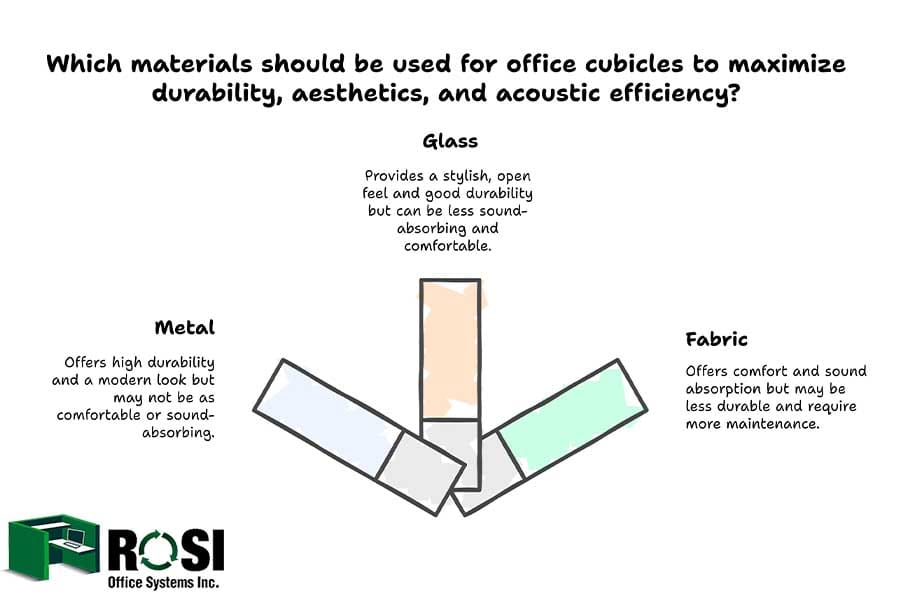
Partitions are usually made of fabric, glass, or metal.
Choosing the right material can both make the office look more attractive and improve the acoustic quality of the environment.
Fabric partitions absorb sound, reduce ambient noise, and increase employee concentration.
Glass partitions create a modern and open feel and are suitable for offices with a minimalist design.
You Might Also Enjoy: Which Brands Offer the Best Modular Dividers for Quiet Offices?
5. Cubicle Furniture
Cubicle furniture includes office desks, chairs, storage units, and accessories that are specifically designed to fit within each cubicle space.
Choosing quality office furniture for cubicles will both increase employee comfort and help with their productivity.
- Ergonomic chairs: These chairs encourage proper posture and reduce employee fatigue by providing proper spinal support.
- Adjustable desks: The ability to change the height of desks allows people to work both sitting and standing, reducing the risk of injuries caused by prolonged sitting.
- Storage units and accessories: Having appropriate spaces to store personal and office items makes the work environment more organized.
6. Cubicle Workstation
Cubicle workstations refer to workspaces that can include individual cubicle settings or open office layouts.
These stations provide a platform for employees to work, collaborate, and complete their tasks.
- Hybrid layouts: For businesses that need a combination of privacy and collaboration, combining workstations with cubicles is a great option.
- Individual and open-space layouts: In these models, employees have private workspaces, while still being able to communicate with their team members easily.
- Dynamic work environment: This combination is especially suitable for organizations that require intensive collaboration as well as individual focus, creating a diverse and dynamic work environment.
7. Cubicle Desk
A cubicle desk should provide space for a computer, documents, and other work supplies without making the space feel crowded or confined.
- Adjustable Desks: One popular option for cubicle desks is adjustable desks, which allow employees to switch between sitting and standing positions.
- Health benefits: Changing from sitting to standing can help improve circulation and reduce back and neck pain, especially for employees who spend long hours sitting at a desk.
How to Plan and Design an Efficient Cubicle Workspace
Whether you’re setting up a new office or redesigning an existing one, our guide to office cubicles provides practical tips on layout, furniture, and ergonomics.
1. Space Planning and Workflow Mapping
Space planning is the first step to creating an efficient work environment.
- Assessing Office Space: Before installing cubicles, you should carefully assess the available space to ensure there are enough workstations for all employees.
- Calculate the number of cubicles: Considering the size of the office and the needs of the team, calculate the number of cubicles that can be installed to avoid crowding or wasting space.
- Mixing spaces for collaboration and individuality: Striking a balance between private areas for focus and shared areas for teamwork is key to designing a successful work environment.
You Might Also Enjoy: What Are the Top Office Cubicle Brands in Modular Interiors?
2. Ergonomics and Employee Comfort
Employee comfort and health are among the most important considerations in the design of any cubicle.
- Desk and chair design: Choosing an ergonomic desk and office chair with the appropriate height helps prevent fatigue and physical problems.
- Standard lighting: Proper lighting is vital for reducing eye fatigue and increasing concentration.
- The importance of ergonomics: Following ergonomic principles improves employees’ physical health and increases their satisfaction with the work environment, which in turn improves productivity.
3. Integrating Technology
The modern workspace requires support from modern tools and technologies.
- Cable and power management: The cubicle design should allow for cable routing and easy access to power and ports.
- USB ports and charging stations: Adding quick charging and connectivity features increases employee convenience.
- Support for digital tools: The work environment should be optimized for the use of computers, laptops, phones, and other digital devices so that work can be done quickly and without disruption.
Materials, Finishes, and Acoustic Features
Our guide to office cubicles explains how to maximize acoustic efficiency and create a comfortable environment for your team.
Choosing Materials for Durability and Style
- Common Materials: Cubicle partitions and panels are usually made of fabric, glass, or metal.
- Impact on durability and strength: The panel material determines the cubicle’s resistance to impact and abrasion.
Metal and glass are often more durable, while fabric offers more comfort and flexibility.
- Impact on the aesthetics of the office: Different materials and finishes can make the office look modern, classic, or minimalist, and coordinate with the company’s brand identity.
- Impact on acoustic performance: Choosing the right materials can reduce ambient noise and create a quieter workspace.
Enhancing Acoustic Efficiency
- Sound-absorbing panels: Using sound-absorbing materials, such as thick fabrics or special acoustic panels, can reduce noise and increase employee concentration.
- The effect of materials on environmental tranquility: The right materials help create a calm and focused environment, especially in busy offices or teams that require high concentration.
- Combining aesthetics and functionality: The choice of materials and finishes should be both visually appealing and optimal for sound control and employee comfort.
Conclusion
In this article, we tried to provide a comprehensive guide to office cubicles that covers all aspects of design, material selection, layout, and technology in the workspace.
Our goal was to enable businesses and office managers to make better decisions about cubicles and create a space that both increases team productivity and ensures employee satisfaction and comfort.
By adhering to ergonomic principles, choosing the right materials, designing workstations appropriately, and paying attention to audio and visual features, a balanced, efficient, and pleasant work environment can be created.
Ultimately, this article was written with the goal of providing a realistic and practical guide to office cubicles so you can take your workspace to the next level of productivity, comfort, and teamwork.

John Ofield is a recognized expert in the office furniture and office cubicle industry in Houston, TX, with over 40 years of experience. As the founder of ROSI Office Systems, he specializes in furniture space planning, custom cubicle designs, modern office chairs and tables, and high-quality commercial furniture. John’s expertise helps businesses enhance productivity and collaboration. He is also dedicated to mentoring entrepreneurs and redefining workspaces to inspire success.