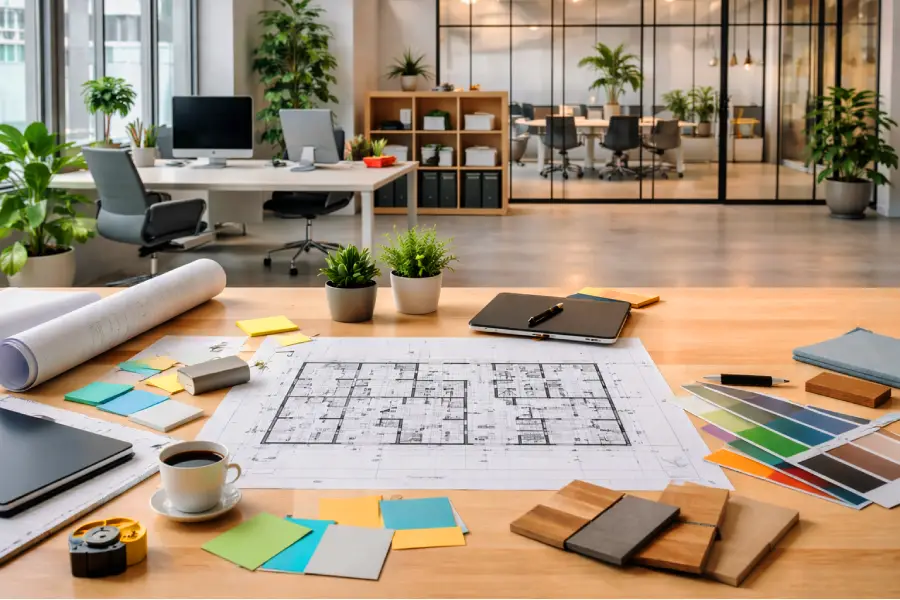
A new office plan can shape how your team works every day.
It affects comfort, focus, teamwork, and even your budget.
A good plan is not just about filling a space with office desks and chairs.
It is about creating a layout that supports your business goals and makes daily work easier.
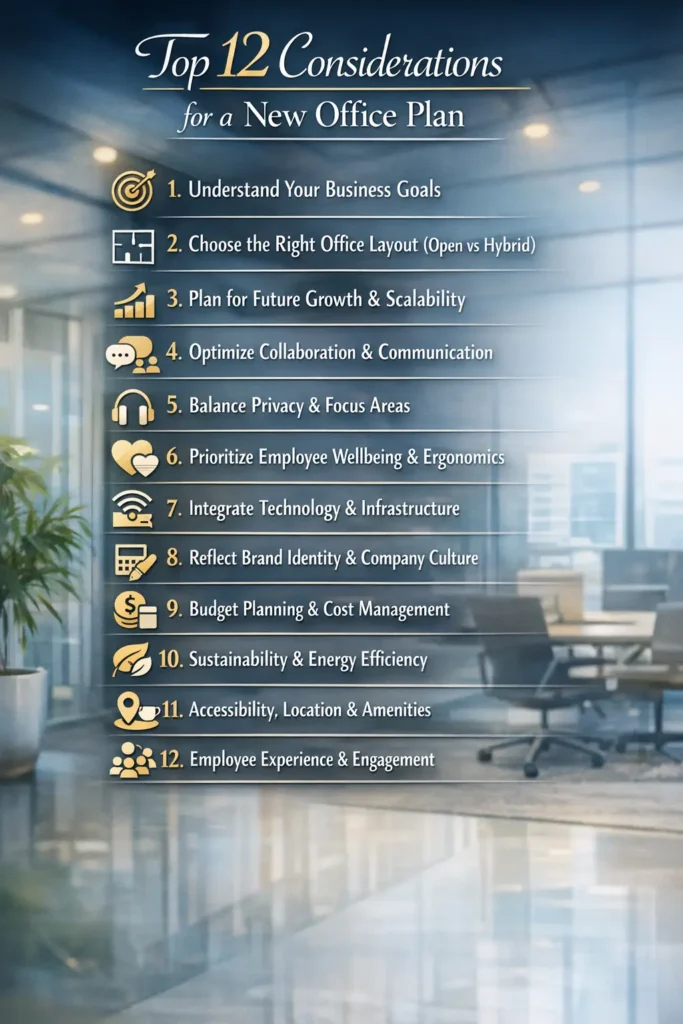
In this article, we will cover the top 12 considerations you should think about before planning a new office.
You will learn how to use space wisely, improve traffic flow, choose the right commercial office furniture, and prepare for future growth.
If you want a practical office plan that works now and later, this guide will help you make smarter decisions.
Now let’s check the top 12 considerations for a new office plan!
You Might Also Enjoy: Home Office Design Ideas in 2026: Ultimate Guide for Productivity & Style
Top 12 Considerations for a New Office Plan
1. Understand Your Business Goals
Before you plan a new office, start with your business goals.
The office should support the way your team works and the results you want to achieve.
A clear purpose will help you make better choices about layout, furniture, and space use.
Think about what the office is mainly for.
Is it a place for focused work, team collaboration, client meetings, or hybrid work?
Some offices need quiet areas for deep concentration.
Others need open spaces for teamwork and flexible use.
Many businesses need a mix of all four.
When you define the main purpose of the office, it becomes much easier to design a space that truly works.
This step helps you avoid wasted space and choose a layout that fits your business needs from the start.
2. Choose the Right Office Layout (Open vs Hybrid)
One of the key decisions in office design is the choice of office layout types, which have a direct impact on productivity, team interaction, and employee focus.
Three common models include Open Office, Private Offices, and Hybrid Workspace.
- Open Office: An open space without dividing walls that increases collaboration and quick communication between teams, but may reduce focus.
- Private Offices: Separate spaces for individuals or teams that provide greater focus and privacy, but limit interaction.
- Hybrid Layout: A combination of both models that tries to maintain a balance between collaboration and focus.
Ultimately, the right choice depends on the type of organization’s activity and should strike a balance between collaboration and individual focus.
3. Plan for Future Growth and Scalability
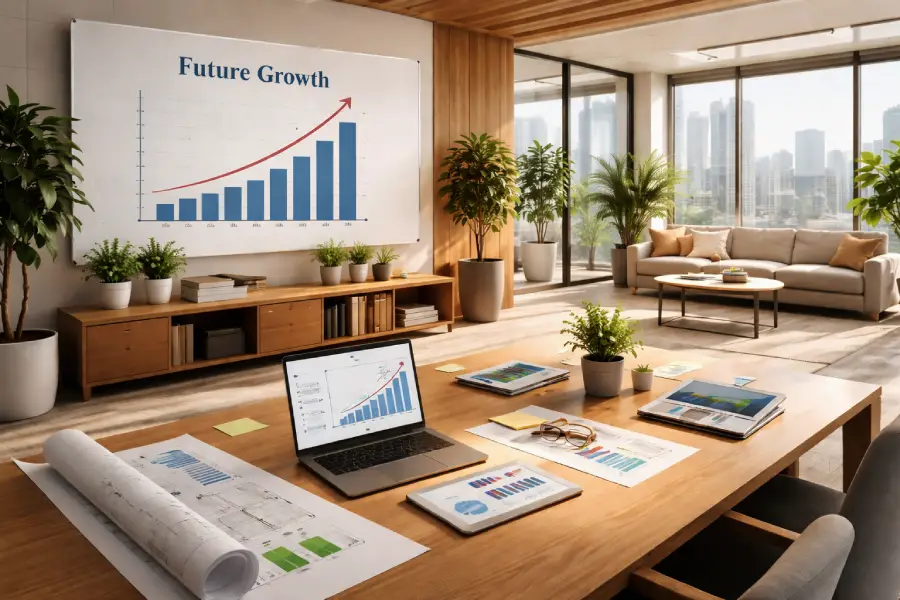
When designing a new office, it is important to consider future growth.
The workspace must be designed to adapt to business changes.
Using modular design and flexible layouts allows you to change the space to suit new needs without incurring high costs.
Also, considering scalability from the beginning allows you to continue using the same space as the number of employees increases.
This approach ultimately helps reduce the need for frequent relocations and saves money and time.
4. Optimize Collaboration and Communication
To increase team productivity, the workspace design should be designed to facilitate collaboration and communication between people.
Creating a suitable collaborative workspace plays an important role in the speed of decision-making and the quality of work.
Placing related teams close together (team proximity) makes everyday communication faster and more effective.
Also, designing informal meeting spaces, such as break areas or shared tables, helps to generate ideas and facilitate natural interaction.
In addition to these, creating collaboration zones or dedicated spaces for teamwork allows for quick meetings and team projects.
Overall, the correct layout of space has a direct impact on increasing productivity and the quality of collaboration in the organization.
You Might Also Enjoy: Does My Business Need Contract Office Furniture?
5. Balance Privacy and Focus Areas
In modern office design, one of the main challenges is striking a balance between teamwork and individual focus.
In open office environments, the problem of noise and clutter can reduce employee concentration.
To solve this problem, quiet spaces and focus rooms should be designed so that employees can focus on important tasks without distractions.
Using phone booths for short calls and meetings also helps reduce distractions in the main space.
In addition to these, acoustic design plays a key role; using sound-absorbing materials and proper layout can reduce noise levels and improve the quality of the work environment.
6. Prioritize Employee Wellbeing and Ergonomics
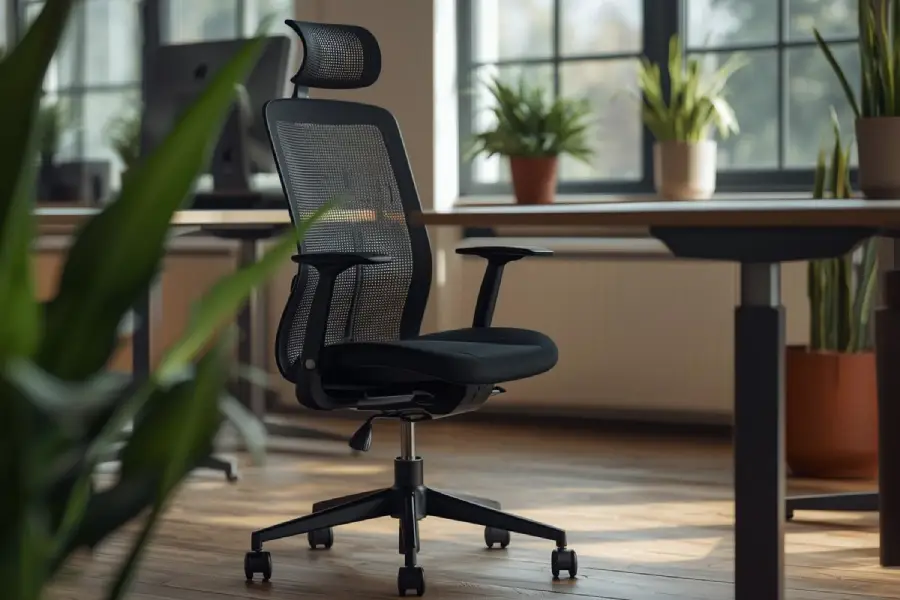
In office design, paying attention to employee health and well-being plays an important role in increasing productivity.
A healthy workspace should support employees both physically and mentally.
Making the most of natural light reduces fatigue and improves concentration.
Choosing ergonomic office chairs and sit-stand desks also helps improve posture and prevent musculoskeletal problems.
Overall, a standard ergonomic office increases job satisfaction and productivity in the long term, considering the physical and mental health of employees.
7. Integrate Technology and Infrastructure
In modern office design, the use of office technology and creating a smart office play a key role in increasing productivity and team coordination.
Strong infrastructure is the foundation of an efficient work environment.
Stable, high-speed WiFi is essential for everyday tasks and online communications.
Using high-quality video conferencing tools also makes it easier for in-person and remote teams to collaborate.
In addition to these issues, paying attention to data security is very important to protect organizational information.
Finally, infrastructure design should support hybrid work models so that employees can work both in person and remotely without any issues.
You Might Also Enjoy: Types of Signage Houston Businesses Use to Support Furniture & Workflow
8. Reflect Brand Identity and Company Culture
Office design should be a reflection of office branding and workplace culture, because the workspace is the first thing that shapes people’s perception of a company.
The right use of colors and visual elements can enhance a brand’s personality and create a sense of harmony and coherence in the environment.
These elements, along with the design of the space, convey the brand message to employees and clients.
Ultimately, an office that is aligned with the corporate identity not only creates a better experience for employees but also plays an important role in talent acquisition and makes the brand appear more professional and attractive.
9. Budget Planning and Cost Management

In office design, office budget planning plays an important role in preventing excess costs and making the right decisions.
It’s not just the initial cost of the design that matters, but also hidden costs such as maintenance, future changes, and equipment.
At ROSI, we help by examining office design to determine how the costs incurred impact productivity, employee satisfaction, and business growth.
Also, the decision between lease or buy should be made based on the company’s long-term goals to achieve the best balance between cost and flexibility.
10. Sustainability and Energy Efficiency
When designing a modern workspace, paying attention to green office design and creating a sustainable workspace is very important, as it helps both reduce costs and reduce environmental impacts.
Maximizing natural light reduces energy consumption and creates a healthier and more pleasant environment for employees.
Also, proper management of energy consumption through energy-efficient equipment and smart systems increases the overall efficiency of the building.
Ultimately, implementing green design principles not only helps preserve the environment but also creates a more professional image of the organization and increases the long-term value of the workspace.
11. Accessibility, Location, and Amenities
Choosing the right office location is one of the key factors in the success of a workspace, as it directly affects employee accessibility and satisfaction.
A good location should provide easy access to public transportation (accessibility) to make daily commutes easier and faster.
In addition to location, the presence of workplace amenities such as cafes, rest areas, parking, and welfare services improves employees’ work experience and increases their satisfaction.
Also, paying attention to inclusive design makes the workspace usable and suitable for all people, regardless of physical ability, and creates an equal and professional work environment.
You Might Also Enjoy: The Best Materials for Corporate Office Furniture in 2026
12. Employee Experience and Engagement
In modern office design, the focus is not only on space, but also on employee experience and employee satisfaction.
A good work environment can directly impact workplace satisfaction and employee performance.
One of the best approaches is to involve employees in the design process, as people will feel more connected when they have a role in shaping the workspace.
This helps increase their engagement and interaction with the workplace.
Creating a positive work experience increases employee retention and prevents key employees from leaving the organization.
Common Mistakes to Avoid in Office Planning
- Too much focus on open office: Designing a completely open space without considering the need for focus and privacy increases noise, distractions, and reduces productivity; while combining it with private spaces and focus rooms creates a better balance.
- Ignoring business growth and future: Designing solely based on current needs will result in future space shortages, the need for relocation, and increased additional costs; therefore, scalability and modular design should be considered from the beginning.
- Lack of attention to sound and light: Failure to pay attention to proper acoustic and lighting conditions can lead to reduced concentration, employee fatigue, and decreased work quality; using natural light and standard acoustic design is essential to improve the environment.
Conclusion
In our article “Top 12 Considerations for a New Office Plan,” we explained that designing a successful office should go beyond appearance or current needs and be forward-looking, creating a space that can accommodate both organizational growth and changing work styles.
In this path, three key principles play a fundamental role: flexibility to allow for future changes and expansion of the space, employee-centric design to increase employee satisfaction, focus, and productivity, and technology to support modern work and hybrid models.
The combination of these three elements makes the office both efficient and scalable, creates a better work experience for employees, and ultimately contributes to the sustainable growth of the organization.

John Ofield is a recognized expert in the office furniture and office cubicle industry in Houston, TX, with over 40 years of experience. As the founder of ROSI Office Systems, he specializes in furniture space planning, custom cubicle designs, modern office chairs and tables, and high-quality commercial furniture. John’s expertise helps businesses enhance productivity and collaboration. He is also dedicated to mentoring entrepreneurs and redefining workspaces to inspire success.