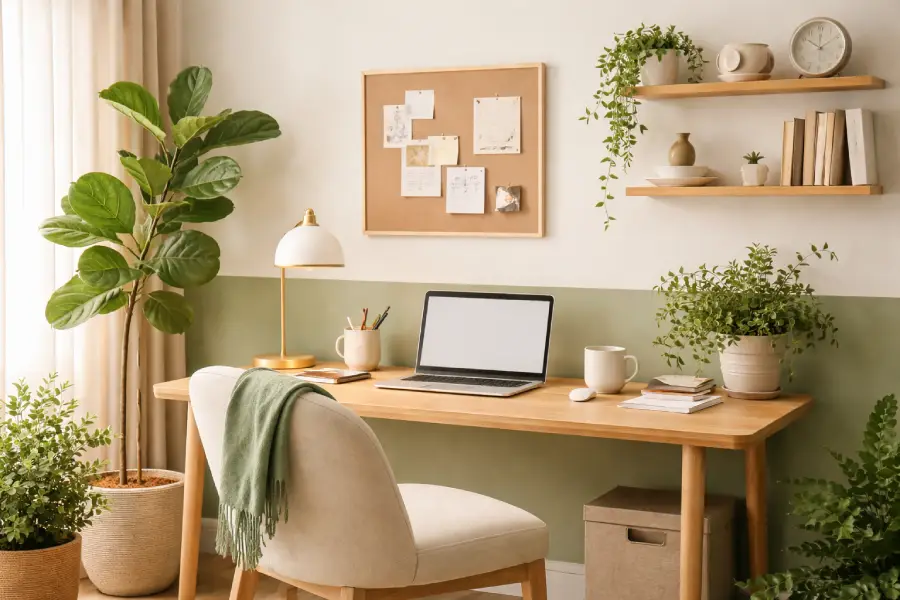
If your home workspace is causing you to lose focus, get tired early, or lose productivity, the problem often comes down to how it’s designed, not just your work habits.
If you’ve ever wondered how to design an ideal home office that’s both beautiful and highly functional, the short answer is: a combination of thoughtful space design, choosing the right equipment, standard lighting, and personalizing the environment based on your work style.
In 2026, home office design goes beyond the simple arrangement of a desk and chair and has become a purposeful approach that simultaneously focuses on efficiency, health, and the quality of the work experience.
This article aims to provide practical solutions based on current trends, showing you how to design a standard home office that suits your needs.
The goal of this article is to give you practical, workable, and budget-friendly ideas so you can design the best version of your home office.
Why Home Office Design Matters in 2026
In 2026, work models such as remote work and hybrid work have become a permanent part of professional life.
Many more people don’t just work from home occasionally, but the main part of their daily activity is done in the home office.
This change has made designing this space no longer a matter of luxury or taste, but rather an essential need.
A proper home office design directly impacts productivity.
When the space is designed properly, focus increases, distractions decrease, and work gets done faster.
On the other hand, an unsuitable environment can cause fatigue, reduced motivation, and even a decline in work quality.
In addition, the work environment also affects physical and mental state.
Poor lighting, non-ergonomic seating, or incorrect layout can cause physical strain and stress over time.
For this reason, in 2026, paying attention to factors such as ergonomics, lighting, and simplicity of space has become one of the main design principles.
Ultimately, a good workspace should fit your work style.
Whether you work in a small home office or a dedicated room, the goal is to have an environment where working is comfortable, stable, and effective.
You Might Also Enjoy: Does My Business Need Contract Office Furniture?
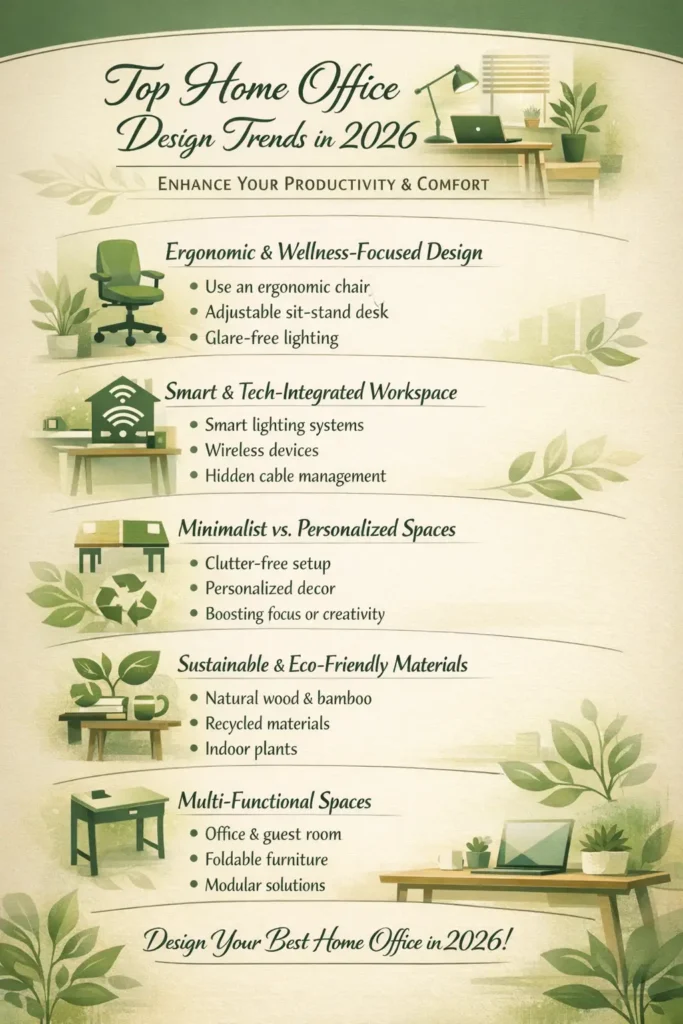
Top Home Office Design Trends in 2026
In 2026, home office design is not just a matter of aesthetics, but is directly related to productivity, comfort, and long-term health.
The shift in work styles towards remote and hybrid work has led people to look for spaces that are both functional and can support long working hours without fatigue.
For this reason, phrases like home office trends 2026 and, in general, home office design trends 2026 have become one of the most searched topics in the field of interior design.
For this reason, in 2026, a lot of attention has been paid to the issue of home workspace design, and searches such as home office trends 2026 show that this issue has become important to many people.
Below, we will examine the most important trends in this field along with practical methods for implementation.
1. Ergonomic and Wellness-Focused Design
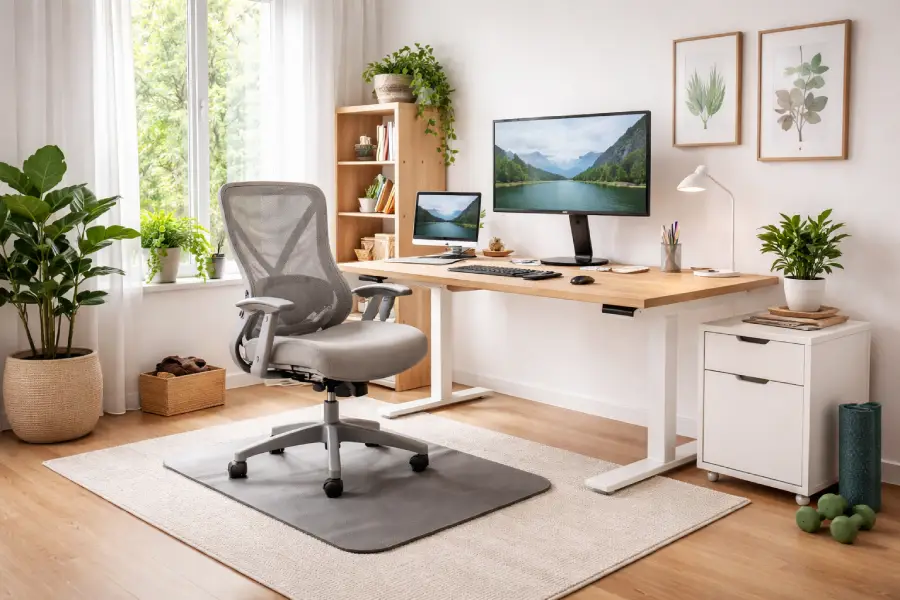
One of the most important parts of the best home office designs 2026 is the serious focus on ergonomic workspace design and body health.
As users spend more time at their desks, poor design can directly cause neck and back pain and decreased concentration.
In this style, the goal is for the work environment to adapt to your body, not the other way around.
Main features:
- Use an ergonomic chair
- Adjust the height of your desk or use a sit-stand desk
- Place your monitor at eye level
- Glare-free lighting to reduce eye fatigue
- Take regular breaks to maintain energy
How to do it?
If you work more than 6 hours a day:
- The monitor should be exactly at eye level.
- Feet should be completely flat on the ground.
- The knee angle should be about 90 degrees.
2. Smart and Tech-Integrated Workspace
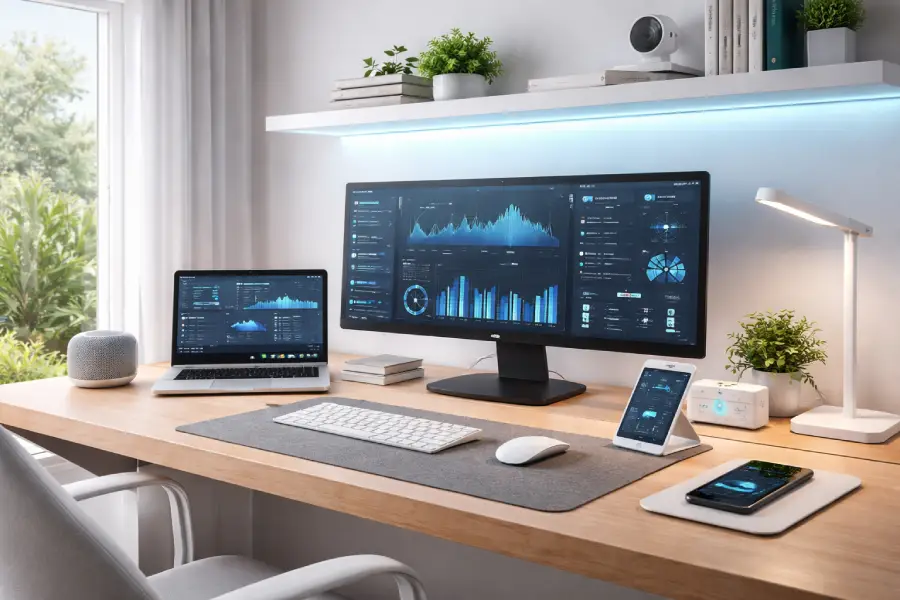
In many of the home office trends in 2026, technology plays a central role.
In fact, the smart home office has become a new standard in home office design ideas 2026.
The goal of this trend is to reduce redundant tasks and increase workflow efficiency.
Main features:
- Smart lighting systems
- Hidden cable management
- Using wireless devices
- Using AI tools to increase productivity
- Multiple monitors for multitasking
How to do it?
- The light in the room changes with the time of day.
- Connect the laptop to the docking station.
- Cables should be completely hidden.
You Might Also Enjoy: Types of Signage Houston Businesses Use to Support Furniture & Workflow
3. Minimalist vs Personalized Workspaces
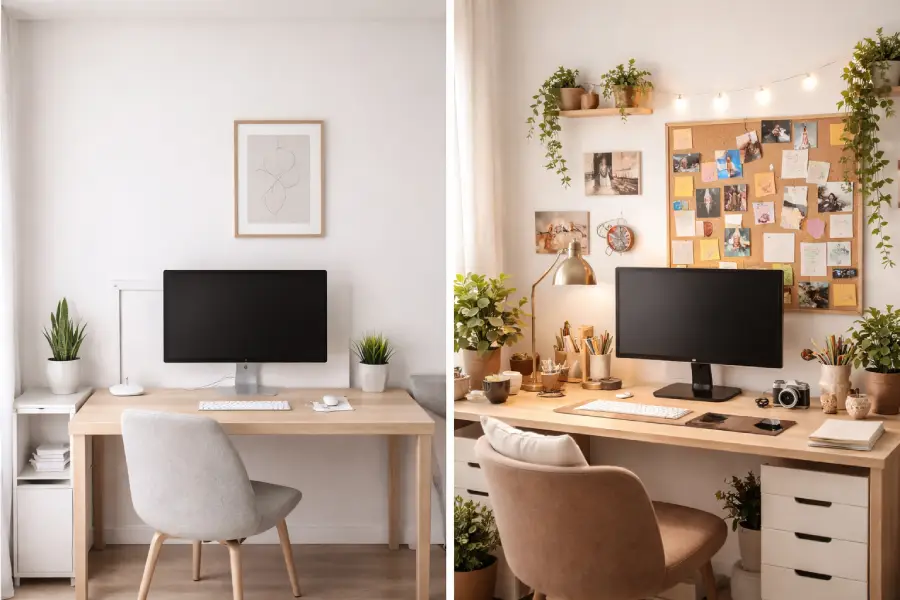
Two completely different approaches are seen in home office design ideas in 2026: minimalist workspace and personalized workspace.
Both fall into the category of best home office designs, but their choice depends on the type of work.
3.1. Minimalist Setup
- Remove unnecessary items
- Focus on the task
- Reduce visual clutter
Good for: Programmers and deep focus work
3.2. Personalized Setup
- Personal and inspiring decor
- Use of specific colors
- Increase creativity
Good for: Designers and content creators
In many of the 2026 home office trends, creative freelancers are using personalized spaces, while analytical work is moving more towards minimalist design.
4. Sustainable and Eco-Friendly Materials
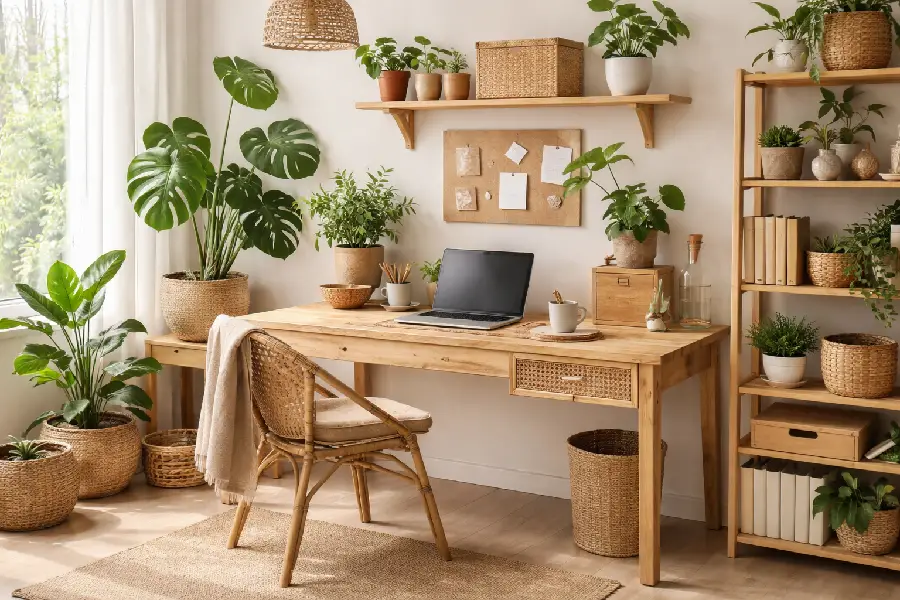
One of the most important directions in 2026 is the use of sustainable materials.
In the best home office designs 2026, sustainable design is no longer an option, but a standard.
Main feature:
- Natural wood
- Bamboo furniture
- Recycled materials
- Natural colors
How to do it?
- Replacing plastic tables with natural wood
- Using plants in space
- Choosing earthy colors
In general, using wooden desks increases the sense of relaxation and reduces visual fatigue while working.
5. Multi-Functional Spaces
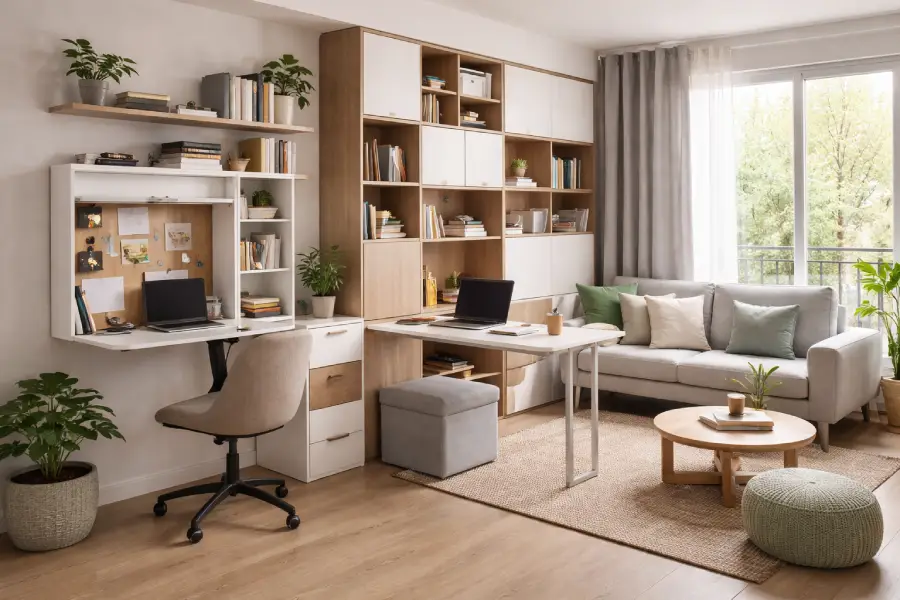
With the growth of remote work, one of the most important parts of home office design ideas in 2026 is designing multifunctional spaces.
This style has become very important in 2026, especially for small homes.
Applications:
- Office and study space
- Office and rest area
- Using folding tables
- Modular office furniture
How to do it?
- Using a foldable wall table
- Designing a zoned space
- Choosing lightweight, portable furniture
In small apartments, this design style, which is very popular, allows for the use of one space for several different purposes.
Ultimately, home office design ideas in 2026 show that the best workspaces are those that offer a combination of ergonomics, technology, sustainability, minimalism, and flexibility.
These features are the basis for the formation of the best home office designs and make the workspace not only beautiful but also completely functional and sustainable.
You Might Also Enjoy: The Best Materials for Corporate Office Furniture in 2026
How to Design a Perfect Home Office Step-by-Step?
Designing the perfect home office isn’t just about choosing a few pieces of furniture and equipment.
The goal is to create a space where you can work for hours without getting tired and stay focused.
Below is a step-by-step method for designing a standard, professional workspace.
Step 1: Define the Primary Function of Your Space
Before choosing a location or purchasing equipment, you need to determine exactly what this space will be used for.
Ask yourself:
Does your work require deep focus?
Do you have a lot of video calls?
Do you need creative space or analytical space?
The type of work you do will determine whether your space should be relaxed, minimal, or flexible.
Step 2: Set Physical Boundaries in the Room
At this point, you need to create a “real boundary” for your workspace, even if you don’t have a separate room.
Methods:
- Use a rug to separate the workspace
- Place a bookcase or shelf as a divider
- Change the direction of the desk relative to the rest of the room
The goal is for your brain to recognize the difference between “work mode” and “rest mode.”
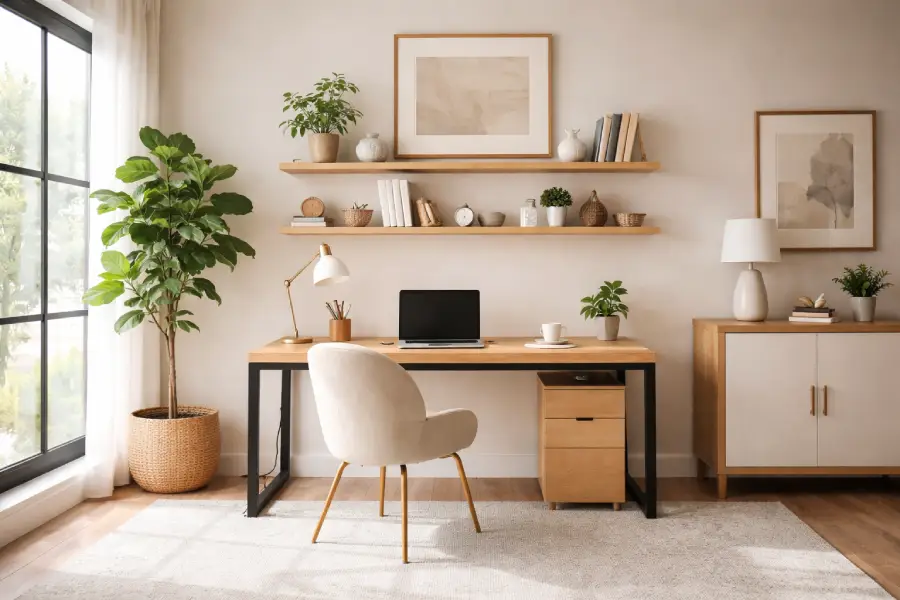
Step 3: Build Your Core Work Setup First (Not Decor)
A common mistake is that people start with the decor.
While the “core setup” must be created first.
Key components:
- A desk with enough space for real work
- A comfortable office chair with adjustable height
- A place to place your laptop or monitor
At this stage, function is important first, then beauty.
Step 4: Design the Work Triangle (Screen – Chair – Desk Alignment)
A standard home office should work based on a simple triangle:
- Eyes (screen level)
- Body (chair posture)
- Work surface (desk height)
The result is reduced fatigue and increased ability to work for long periods without physical strain.
Step 5: Eliminate Distractions Before Adding Anything Else
Before you add anything to the space, you need to remove distractions.
Examples:
- Eliminate excess cables
- Removing non-work items from the office desk
- Turn off extra visual elements
Step 6: Add Only Functional Personal Elements
At this stage, only things that are both practical and helpful to the mind are added.
Examples:
- A small plant to reduce stress
- A dimmable lamp
- A notepad or planner
Note that decor should not clutter the space; it should contribute to functionality.
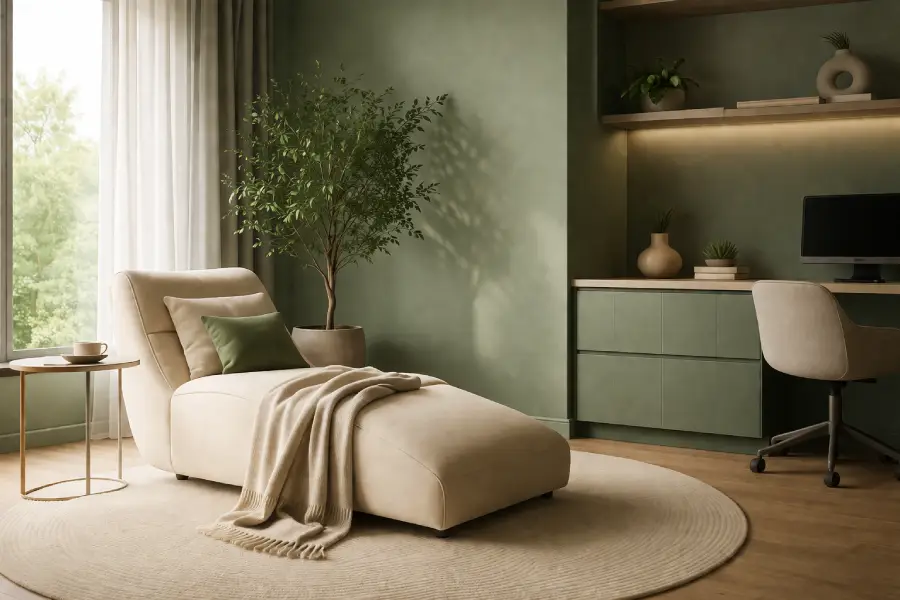
Home Office Ideas by Style
In home office design, the choice of style has a direct impact on how you feel and function while working.
Each style is suitable for a specific type of work and work personality.
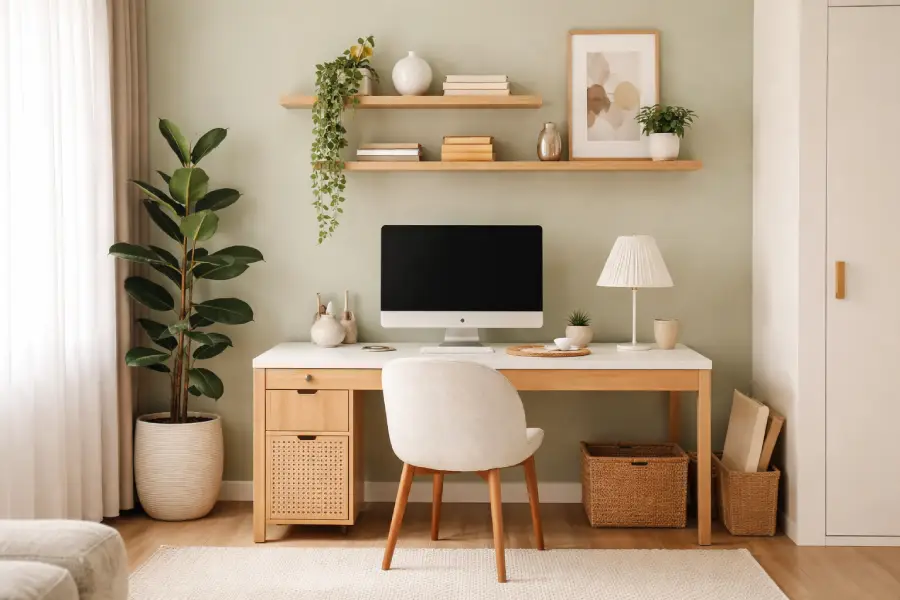
- Minimalist Style: In this style, the space is designed to be simple and quiet to minimize distractions.
The use of neutral colors and limited equipment increases focus and mental order and is very suitable for analytical work or deep concentration.
- Modern Luxury Style: This style combines modern design and high-quality materials that create a professional and stylish atmosphere.
Precise lighting and subtle details make the work environment both functional and visually impressive.
- Cozy / Warm Workspace: This style uses warm lighting, natural colors, and soft elements to make the space more relaxing and intimate.
This type of design is very useful for reducing fatigue during long work sessions.
- Creative Workspace: This style is suitable for creative work and helps increase ideation and creativity by using a variety of colors, inspiring elements, and free layout.
You Might Also Enjoy: Ultimate Guide to Office Cubicles for Efficient Workspaces
Best Colors for a Home Office (Psychology-Based)
- Blue: Helps increase concentration and reduce distractions, suitable for precise and long tasks.
- Green: Creating a sense of calm and mental balance, suitable for reducing stress in daily tasks.
- Neutral: Neutral colors like white and gray to create a simple, uncluttered space.
Common Home Office Design Mistakes to Avoid
1. Bad Lighting
One of the most common mistakes is using improper lighting.
Too little light can cause eye strain and drowsiness, while overly bright or direct light can reduce concentration.
A standard workspace should have a balanced mix of natural and artificial lighting.
2. Wrong Chair
Using a non-ergonomic chair is one of the biggest mistakes in home office design.
An improper chair may not cause immediate problems, but over time, it can lead to back and neck pain and reduce work performance.
3. Cluttered Workspace
Having extra devices, messy cables, or unnecessary objects causes mental distraction and reduces focus.
A clean and simple workspace helps your mind relax, and you can work faster and more accurately.
Pro Tips for Productivity in 2026 Edition
- AI tools: Help you write faster, manage tasks, and increase productivity by saving time.
- Standing desk: Reduce physical fatigue and increase energy by alternating between sitting and standing.
- Focus zones: Divide the workspace into specific sections to reduce distractions and increase focus.
Conclusion
Ultimately, designing an effective workspace in 2026 has become about creating a functional and purposeful environment to increase productivity, comfort, and focus.
In this article on Home Office Design Ideas in 2026, we saw how new trends, principled layout, ergonomic choices, and smart customization can transform even a small space into a fully professional workspace.
The important thing is that a successful home office should fit your work style, reduce distractions, and support you both physically and mentally.
Whether you prefer a minimalist style, modern and technological spaces, or warm and creative environments, the right choices can significantly improve the quality of your daily work.
Ultimately, by following these principles, you can create a space that is not only beautiful and organized but also helps sustainably increase your productivity and performance in the long run.

John Ofield is a recognized expert in the office furniture and office cubicle industry in Houston, TX, with over 40 years of experience. As the founder of ROSI Office Systems, he specializes in furniture space planning, custom cubicle designs, modern office chairs and tables, and high-quality commercial furniture. John’s expertise helps businesses enhance productivity and collaboration. He is also dedicated to mentoring entrepreneurs and redefining workspaces to inspire success.