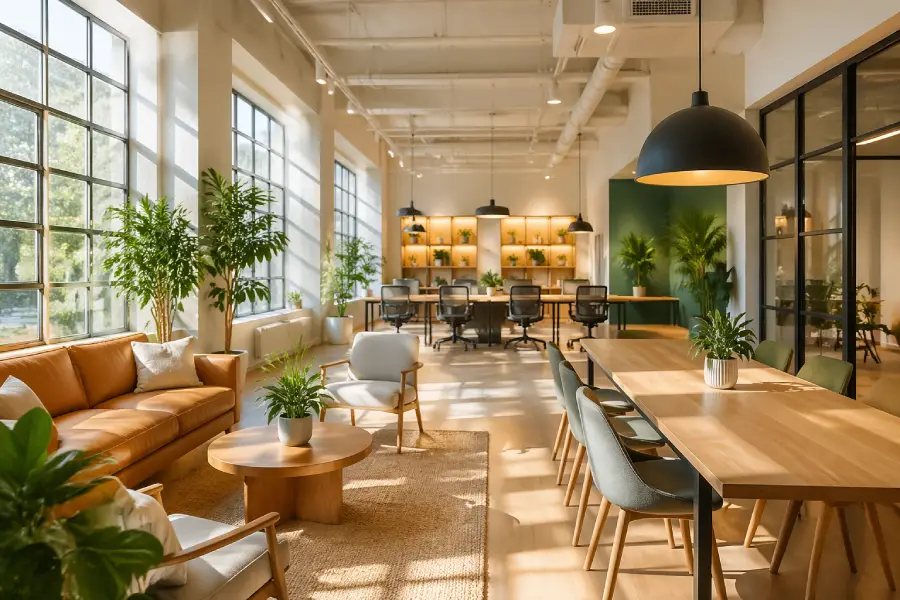
Yes, coworking space furniture is far more than just a desk.
It shapes how people focus, collaborate, move through the space, and experience the brand as a whole.
It is the correct selection and arrangement of these elements that determines whether a coworking space is simply a place to sit or becomes an environment where people actually want to work, interact, and return.
If a space consists only of repetitive rows of desks, it quickly becomes a commodity, something interchangeable and lacking identity.
But when the design is based on zoning, furniture variety, and creating a purposeful experience, the same space can become a destination—a place chosen not only for work, but also for focus, networking, and even inspiration.
In this guide, we look at why modern office furniture in a coworking space is about more than just looks or the number of office desks, and how you can make the right decisions to create a space that is both efficient and long-lasting.
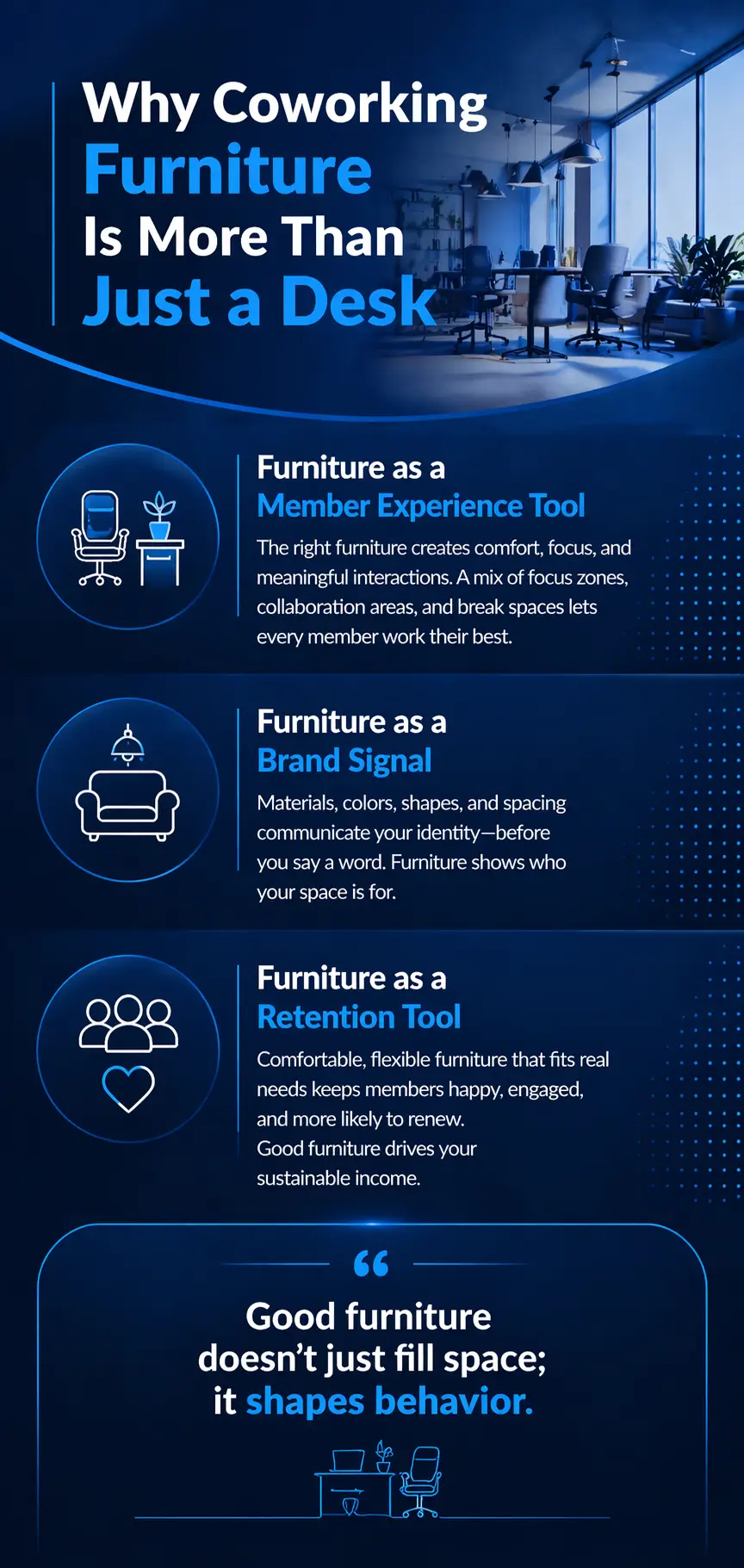
Why Coworking Furniture Is More Than Just a Desk
In a coworking space, furniture isn’t just a decorative choice—it’s part of the operational infrastructure of the space.
The type of desk, chairs, partitions, and even their layout directly affect workflow, access to electricity, lighting, acoustics, and the movement of people.
For example, ergonomic office chairs and standing desks can increase productivity, while the wrong choice can lead to fatigue, dissatisfaction, and even people leaving the space.
On the other hand, proper traffic flow, layout planning, and zoning design help minimize interference between focused tasks and group activities.
If you don’t choose the right furniture, even the best location can’t make up for a poor user experience.
You Might Also Enjoy: Top 12 Considerations for a New Office Plan
Furniture as a Member Experience Tool
When the user enters a space, they interact with the furniture first and foremost.
Comfort, focus, and even the quality of social interactions all start here.
A successful space isn’t just rows of desks; it’s a combination of focus zones, collaboration areas, and break spaces.
This variety allows each user to choose the best spot depending on the type of work they do.
As a result, collaborative office furniture becomes a tool for shaping the user experience, not simply a means of filling space.
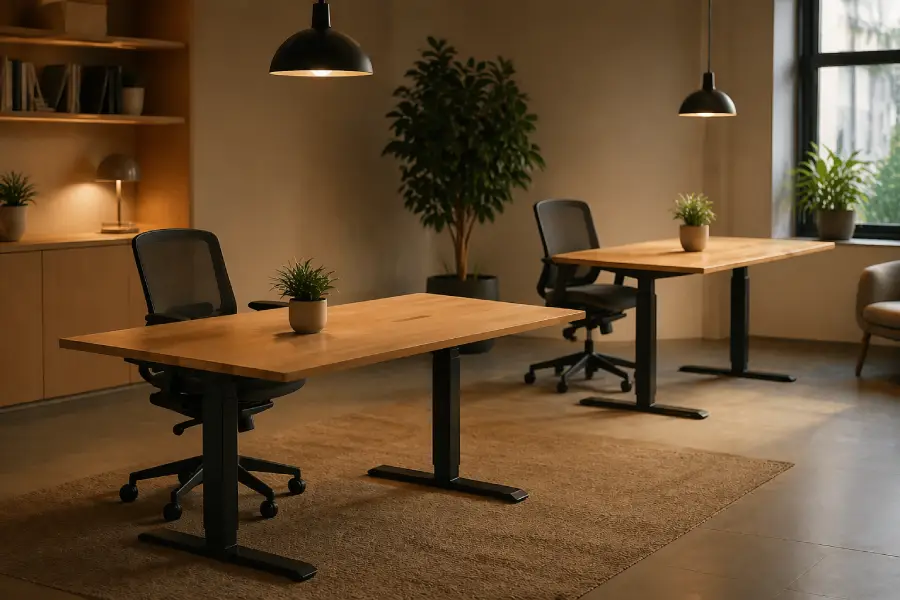
Furniture as a Brand Signal
Furniture is one of the most obvious signs of your brand identity.
A minimalist space with simple lines conveys a different message than a warm, creative space with a variety of colors.
The choice of materials, colors, shapes, and even the spacing between desks all tell the user what kind of people this space is designed for: startups? freelancers? corporate teams?
In fact, without the need for explanation, furniture alone can define your brand’s place in the user’s mind.
Furniture as a Retention Tool
Many operators focus on acquisition, but what makes a coworking space successful is user retention.
Comfortable, flexible furniture that aligns with users’ real needs encourages people to stay longer in the space and increases the likelihood that they’ll renew their memberships.
In contrast, an uncomfortable desk or a lack of variety—even if it’s cost-effective—can lead to user drop-off over time.
In other words, good furniture directly impacts your sustainable income.
Good furniture doesn’t just fill space; it shapes behavior.
Start with User Types, Not Products
One of the common mistakes in coworking space design is to start by buying a desk instead of getting to know the user.
Meanwhile, if you don’t know who is going to use the space, the furniture selection won’t be done properly.
Who are your users?
Every group has different needs:
- Freelancers need focus and a quiet space.
- Startup teams depend on collaboration and teamwork.
- Hybrid teams want both focus and interaction.
- Client-facing professionals need privacy and a professional space for meetings.
If you don’t take these differences into account, the space won’t be ideal for anyone.
Who needs what?
Before buying furniture, answer these questions:
- Who needs high focus?
- Who can’t work without collaboration?
- Who needs real privacy?
This step is simple, but it’s also crucial.
Why is it a mistake to buy a desk in the first place?
If you start with desks first, you limit your own flexibility.
Early layout decisions make it harder to change the space later.
Instead, if you first understand user behavior, decision-making becomes easier.
The right approach is to ask: How does our user work? Instead of asking: What desk should we buy?
Once you know the answer to this question, choosing furniture becomes much easier.
You Might Also Enjoy: Home Office Design Ideas in 2026: Ultimate Guide for Productivity & Style
Choosing the Right Coworking Furniture for Every Zone
A successful coworking space doesn’t have just one type of space.
It’s made up of several different zones.
Each zone serves a different purpose, and each one requires furniture that supports that function.
Without this separation, the space can feel crowded, inefficient, and difficult to use.
But if designed correctly, both productivity increases and the user experience improve.
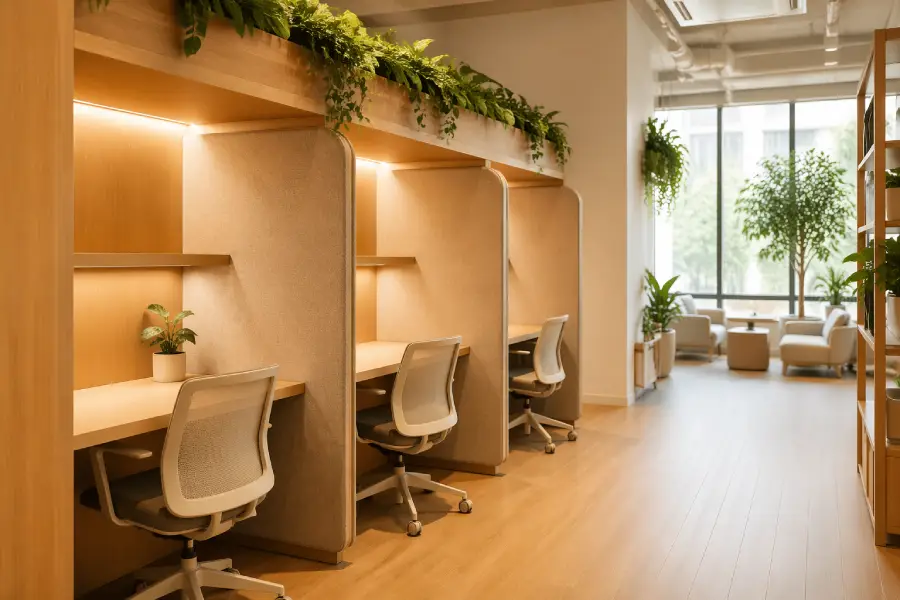
Focus zones
This is a space for deep work.
There should be minimal distractions here.
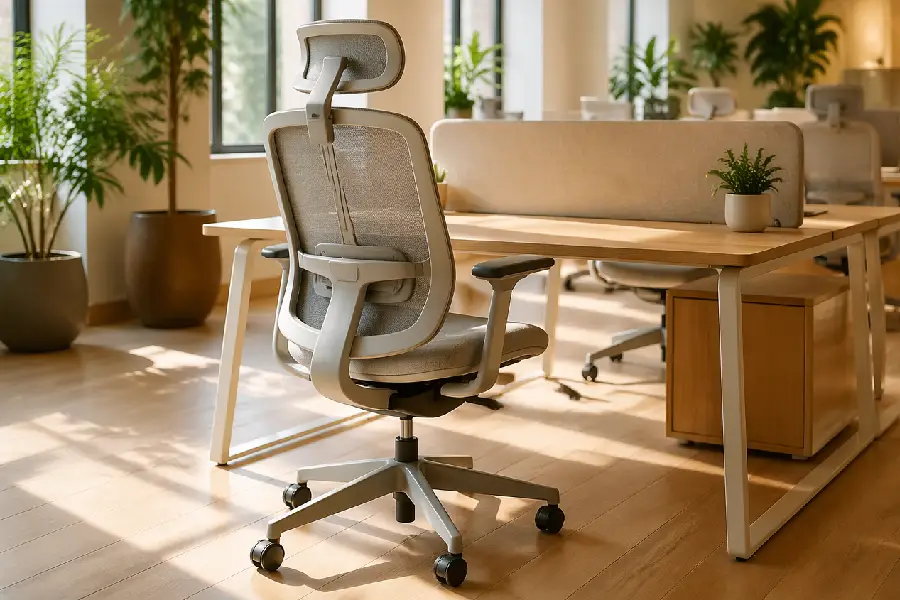
The user works long hours in this area, so comfort and ergonomics are important.
Suitable furniture:
- Simple and neat coworking desk furniture
- Ergonomic task chairs for long-term use without fatigue
- Sit-stand desks for changing posture and increasing energy
- Monitor arms/power access for organization and desk clutter reduction
This zone directly affects productivity.
If not designed properly, the user’s focus will quickly be lost.
Collaboration zones
This section is for teamwork.
For discussion, ideation, and decision-making.
The behavior of users in this space is variable.
So the furniture must be flexible.
Suitable furniture:
- Communal tables for group work
- Movable tables for quick layout changes
- Whiteboard-adjacent furniture for brainstorming and writing down ideas
This zone enables real collaboration.
If it is designed properly, the quality of teamwork improves.
Quiet and private zones
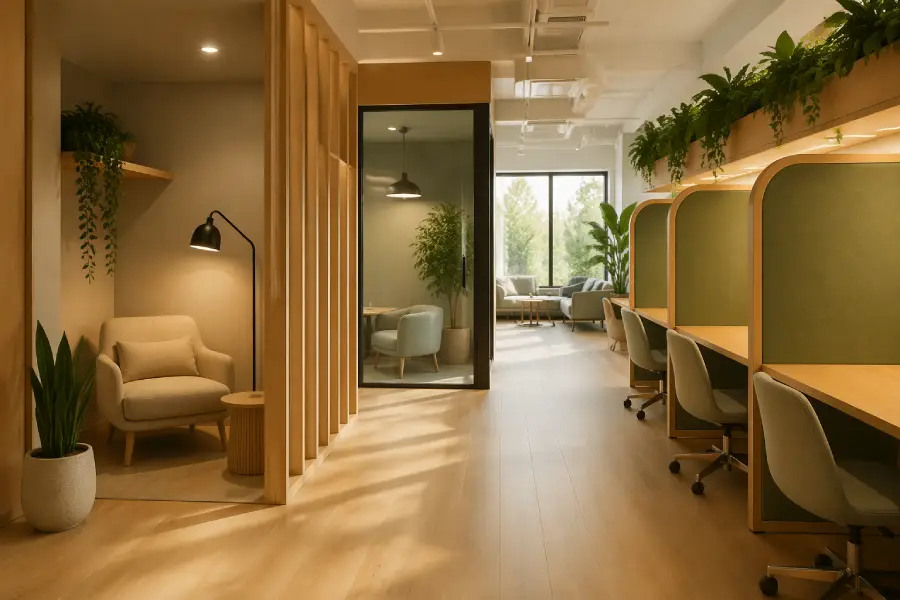
Some tasks require full focus or involve sensitive contacts.
Privacy is the most important factor here.
Suitable furniture:
- Phone booths for quick calls
- Acoustic pods for uninterrupted focus
- Privacy screens to reduce visibility and ambient noise
This space helps critical tasks be completed without interruption and increases user satisfaction.
Lounge and social zones
This area is for rest and social interaction.
Users step away from work mode here.
But this space is not just for relaxation; it has an impact on the overall experience and user retention.
Suitable furniture:
- Lounge seating for comfort and relaxation
- Coffee tables for short conversations
- Breakout furniture for quick breaks
- Cafe-height seating for informal and social spaces
This zone helps restore users’ energy and increase their sense of belonging to the space.
You Might Also Enjoy: Does My Business Need Contract Office Furniture?
The Best Coworking Furniture Mix Balances 5 Things
A successful coworking space isn’t built just by choosing a few good desks.
The right furniture combination should cover several different needs at the same time.
If any of these elements is weak, the user experience won’t feel complete.
- Comfort: Convenience is the first thing the user experiences.
If the chair or desk is not comfortable, even the best design won’t work.
When shopping, don’t just focus on appearance.
Be sure to test ergonomic chairs, not just choose them.
Desks should also be suitable for prolonged use, preferably with sit-stand desks.
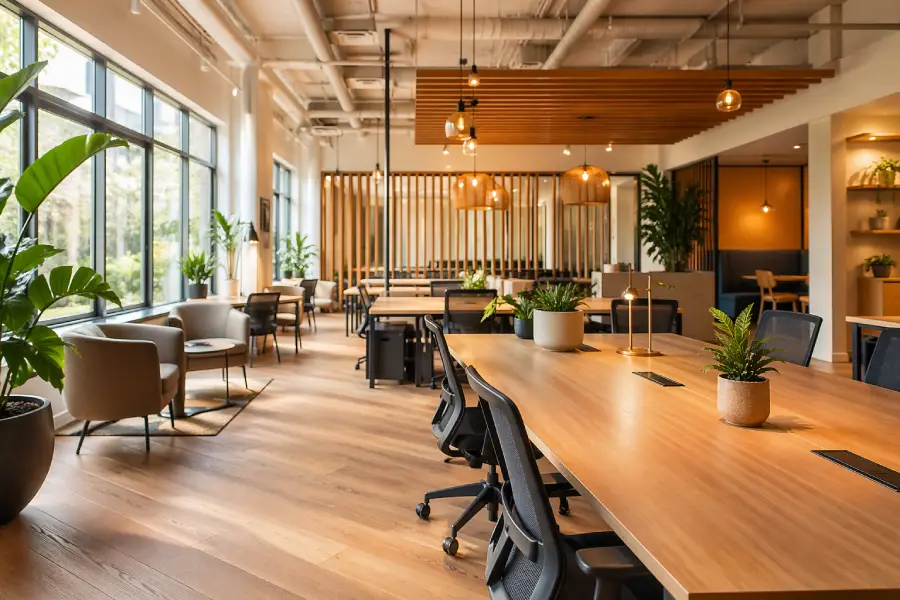
- Flexibility: A workspace doesn’t always stay the same.
Teams grow, change, or relocate.
So furniture should be flexible.
Use movable tables and modular design.
If the layout changes drastically, space will quickly become limited.
- Privacy: Not all users do the same type of work.
Some people need full focus.
For these people, privacy is essential.
Use acoustic pods and privacy screens.
Even the distance between desks is important and affects focus.
- Durability: In a coworking space, usage is very high, so quality should be a priority.
Poor-quality furniture wears out quickly and ends up costing more in the long run.
Go for durable materials and an industrial-grade design, not just the cheapest option.
- Aesthetic cohesion: The appearance of a space has a direct impact on the user’s feelings.
If the design is inconsistent, the space will look chaotic.
Everything doesn’t have to be the same shape, but the colors, materials, and styles should be coordinated.
This coordination creates a sense of professionalism and trust.
Coworking Desk Furniture Is Only the Starting Point
Coworking desk furniture is just a starting point, not the entire solution.
Desks are important because they directly impact focus, comfort, and daily productivity, but relying on them alone creates a confined and inflexible space.
Different users have different needs; some need dedicated desks for stability, some work better with hot desks, and teams often use benching systems for better collaboration.
For short, quick tasks, touchdown spaces are a better option.
Even sit-stand desks depend on the conditions of use; they are very useful for long, deep work, but they are not necessary for all parts of the space.
Ultimately, a good coworking space is not built on choosing one type of desk, but on the right mix of different desk types and adapting them to the way users actually work.
You Might Also Enjoy: Types of Signage Houston Businesses Use to Support Furniture & Workflow
Don’t Ignore Coworking Office Supply Management
In a successful coworking space, it’s not just the furniture that matters.
Office supply management also plays an important role.
If this part isn’t right, even the best design will ruin the user experience.
- Storage, lockers, print zones, cable discipline: Users need order, and personal belongings must have a designated place.
Lockers and storage spaces help keep the space organized.
Cable management also improves the appearance and use of the space.
- Supply access and reordering: Access to supplies should be quick and easy.
If supplies like paper or office supplies run low, work can be disrupted.
A simple system for reordering supplies is essential.
- Managing high-use items in shared spaces: Consumables like cables and chargers run out quickly.
If they are not managed, there will always be shortages.
This causes dissatisfaction among users.
Space management affects the lifespan of furniture.
Good management both increases the durability of furniture and improves the user experience.
Common Mistakes When Choosing Coworking Furniture
Choosing coworking furniture, if done incorrectly, will affect the user experience, productivity, and even the longevity of the space.
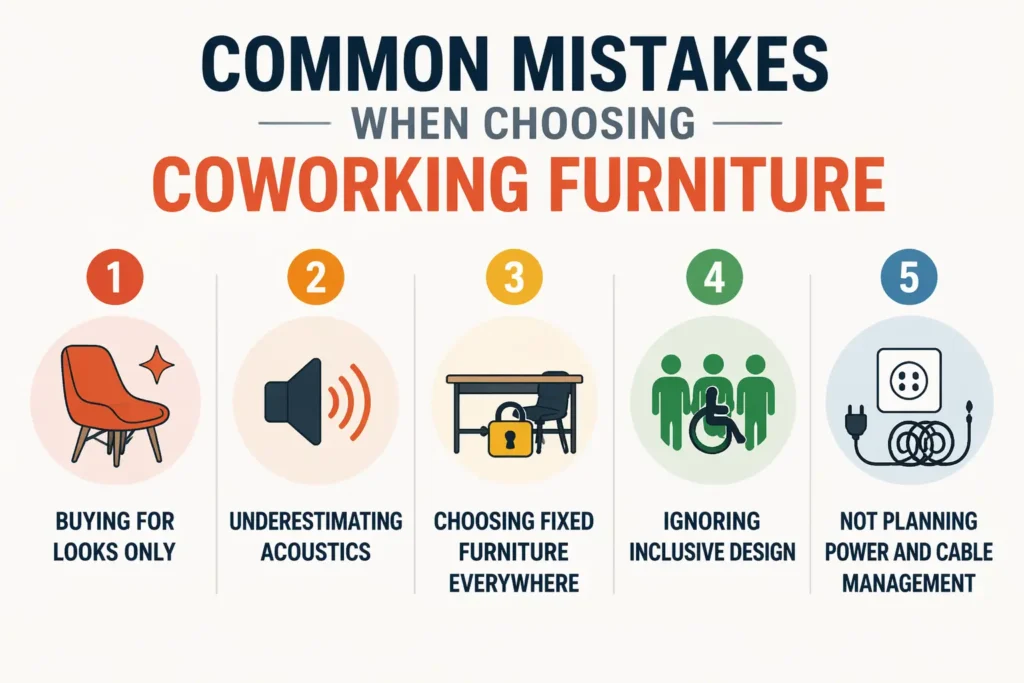
1. Buying for Looks Only
One of the most common mistakes is focusing only on appearance.
If comfort and functionality are not considered, the user will quickly become dissatisfied.
Ultimately, the space may look good but not function well.
2. Underestimating Acoustics
Sound is very important in a coworking space.
If acoustics are not properly managed, users lose focus.
Open spaces without sound control can become tiring.
Using acoustic panels or proper design can solve this problem.
3. Choosing Fixed Furniture Everywhere
Workspaces are always changing.
If all the furniture is fixed, the flexibility of the space is lost.
It is best to use a combination of fixed and movable furniture.
4. Ignoring Inclusive Design
Not all users have the same needs.
Some require more convenience or special access.
If inclusive design is not considered, a portion of users will be excluded.
A good space should be usable by different people.
5. Not Planning Power and Cable Management
If access to electricity and cables is not designed properly, daily work becomes difficult.
Cable and outlet management should be included in the design from the beginning.
This has a direct impact on the user experience.
What This Looks Like in Modern Houston Coworking Spaces
In modern coworking spaces in Houston, the focus isn’t just on providing a few simple desks.
Market demand has shifted towards flexibility, better facilities, and common areas designed for different work styles.
Today, many of these spaces use phone booths, lounge zones, and experience-based settings to make the environment more adaptable and comfortable throughout the day.
For this reason, local buyers expect more than just desks and chairs from coworking furniture—they are looking for a space that simultaneously supports focus, collaboration, and privacy.
Final Answer: So, Is Coworking Space Furniture More Than Just a Desk
Yes, absolutely. Coworking space furniture is much more than just a simple desk.
This space should simultaneously support focus, collaboration, privacy, and comfort.
If designed correctly, it completes the user experience and shapes their behavior.
In contrast, the wrong choice only fills space without creating real value.
Ultimately, the best furniture strategy creates a space that works harder than its size.

John Ofield is a recognized expert in the office furniture and office cubicle industry in Houston, TX, with over 40 years of experience. As the founder of ROSI Office Systems, he specializes in furniture space planning, custom cubicle designs, modern office chairs and tables, and high-quality commercial furniture. John’s expertise helps businesses enhance productivity and collaboration. He is also dedicated to mentoring entrepreneurs and redefining workspaces to inspire success.